Paving Machines in Action: From Highway to Driveway

Paving Machines in Action: From Highway to Driveway
When you cruise along a freshly sealed highway or roll into a smooth new driveway, you’re experiencing the result of precision teamwork between heavy machinery, skilled operators, and advanced technology. Paving machines are at the heart of every surfacing project – from major infrastructure works to small residential jobs. But how do these machines actually work, and what sets the different types apart? Here’s a closer look at how paving machines operate in practice and why they’re essential to Australia’s road and construction industry.
From Raw Mix to Smooth Surface
Asphalt is made from crushed rock, sand, filler, and bitumen – a petroleum-based binder that holds everything together. The mix is produced at an asphalt plant, heated to around 160°C, and transported to the site in insulated trucks. That’s where the paving machines take over.
The key machine in the process is the paver. It receives the hot asphalt from the truck and spreads it evenly across the prepared base. Following close behind are the rollers, which compact the material to create a dense, durable, and even surface. Together, they ensure the pavement has the correct thickness, slope, and texture.
Læs også:

The Paver – Precision on the Move
A modern asphalt paver is a sophisticated piece of equipment. It features a hopper where the asphalt is loaded, conveyors that move the material forward, and augers that distribute it evenly across the width of the mat. At the rear sits the screed, which levels and pre-compacts the asphalt.
Today’s pavers often use GPS and laser-guided systems to achieve millimetre accuracy – crucial for highways and airport runways, where even small irregularities can affect safety and performance. Operators constantly monitor temperature and adjust speed to ensure the asphalt stays workable until it’s compacted.
The Rollers – Heavyweight Precision
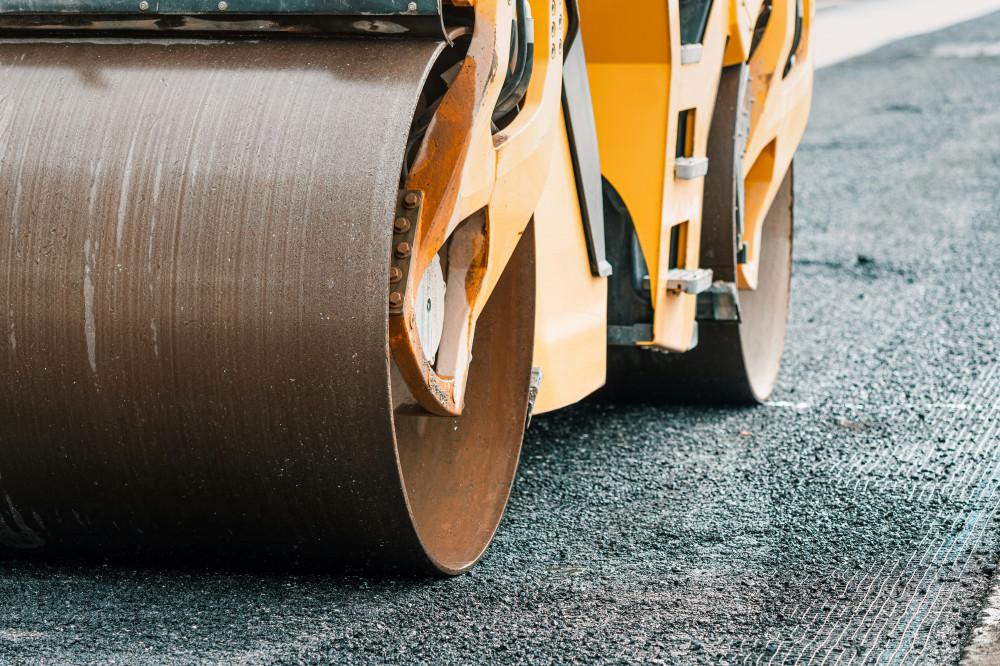
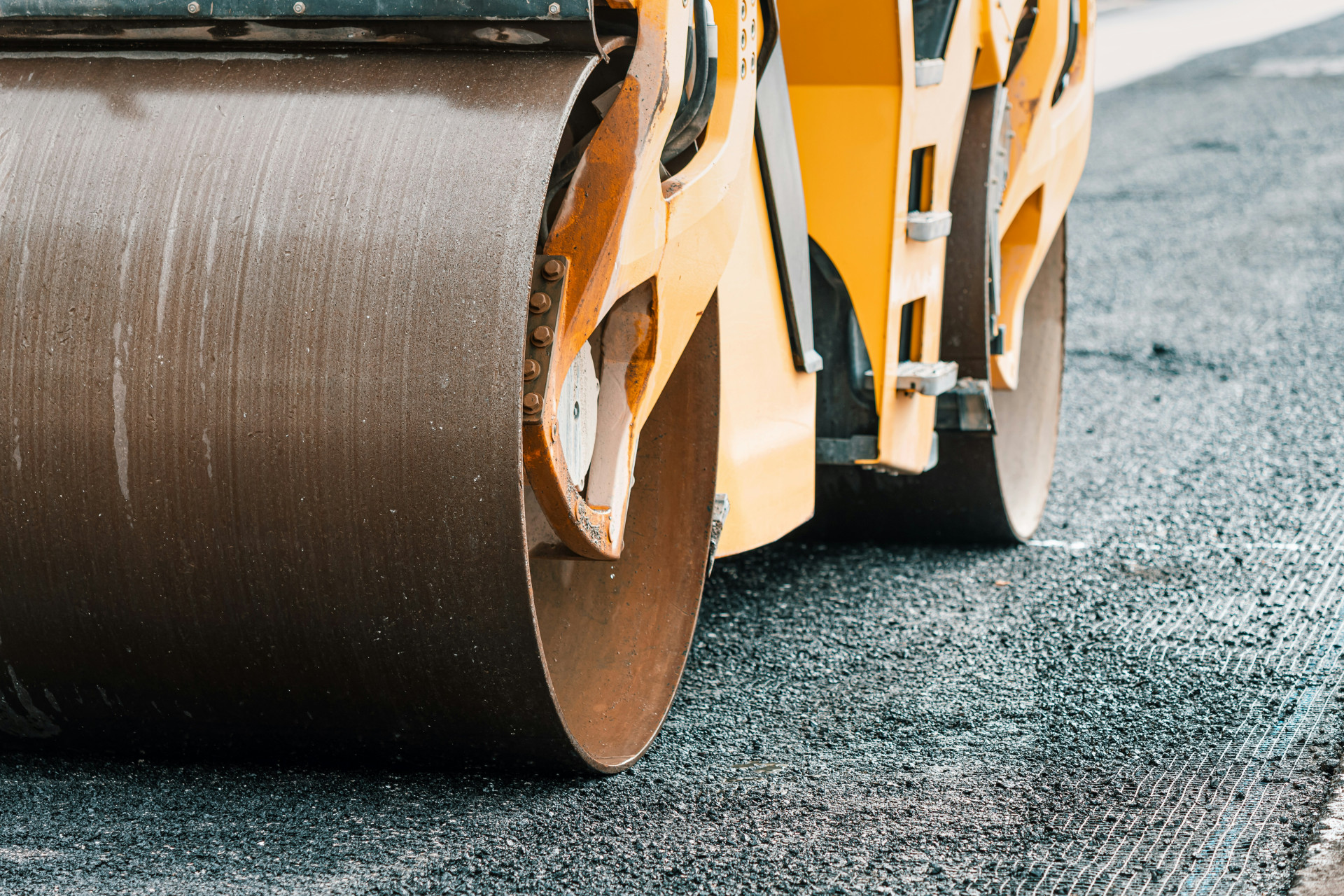
Once the asphalt is laid, it must be compacted before it cools. This is the job of the rollers, which can weigh anywhere from one to fifteen tonnes. There are several types, each with a specific role:
- Smooth drum rollers perform the initial compaction and create a flat surface.
- Vibratory rollers use oscillation to pack the material tightly.
- Pneumatic (rubber-tyred) rollers finish the job, sealing the surface and ensuring uniform density.
Timing is critical. If the asphalt cools too much before compaction, it won’t bond properly, reducing the pavement’s lifespan. That’s why pavers and rollers work in a carefully coordinated rhythm.
From Highway to Driveway – Same Principles, Different Scale
While the basic paving principles are the same, the scale of the machinery varies depending on the project. Large pavers capable of laying up to 10 metres wide are used on highways and major roads, while compact models are ideal for car parks, footpaths, and residential driveways.
For smaller jobs, contractors often use mini pavers and lightweight rollers. These machines are easier to manoeuvre in tight spaces and more cost-effective, yet they still deliver professional results. Many Australian contractors now offer tailored solutions for suburban and rural projects, where access and space can be limited.
Technology and Sustainability on the Rise
Australia’s paving industry is rapidly evolving. New-generation machines are more fuel-efficient, emit less CO₂, and can handle recycled asphalt materials. Increasingly, old road surfaces are being milled, reheated, and reused – reducing waste and conserving natural resources.
Digital technology is also transforming the process. Operators can now monitor temperature, paving speed, and compaction levels in real time using onboard sensors and software. This data-driven approach improves quality, reduces material waste, and enhances environmental performance.
A Blend of Machines, Skill, and Experience
Despite the technological advances, paving remains a craft that relies on human expertise. Experienced operators read the material, assess weather conditions, and make split-second adjustments to achieve the perfect finish. A well-laid surface is the result of precision, teamwork, and timing – from the first truckload of asphalt to the final pass of the roller.
Next time you drive on a new stretch of road or step onto a freshly paved driveway, take a moment to appreciate the complex machinery and skilled professionals behind it. Paving machines may work quietly in the background, but without them, Australia’s transport networks and everyday access roads simply wouldn’t hold together.
Læs også: